

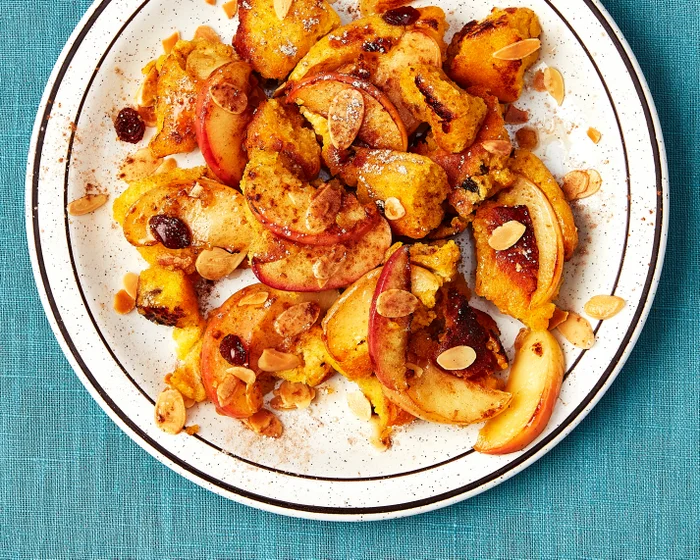
This fruity central European pancake dish can be served as part of a main course or as a dessert. Our resident perfektionistin flips through a selection of the best recipes
Schmarrn, or schmarren, Anja Dunk writes, is “peasant food at its best: filling, simple and comforting”. The usual English translation, pancake, a dish we generally associate with delicate desserts is, I think, somewhat misleading; schmarren, as it’s also spelled, bears very little resemblance to a thin, lacy crepe, and instead sits somewhere between our own plump, rich Shrove Tuesday numbers and a batter pudding. Indeed, you’ll find it on the sweets section of restaurant and cafe menus, but in Germany, Dunk reports in her book Strudel, Noodles and Dumplings, it “passes as a main meal, not dessert, because it is very filling and not particularly sweet in flavour”, and also, I suspect, because “it takes 10 minutes to make from start to finish” and is therefore a brilliantly quick supper. (“Quite frankly,” she adds,” as a mother, I find this recipe a godsend.”)
Austro-Hungarian in origin, it’s eaten in both Germany and Austria, and there are many variations, including kaiserschmarren (studded with rum-soaked raisins), savoury potato schmarren, semolina schmarren and bread schmarren, though fruit, often apples, but also stone fruit or berries, seems to be the most common pairing. Whether you’re serving this as a main course (it goes very well with sausages) or afterwards, it’s a very handy addition to the repertoire, especially when paired with soured cream or ice-cream.